

Tango
August 13, 2026
Scrolling Isn't Connection: Why People Are Choosing Live Video Chat Over Social Media
Curious why live video chat feels different from scrolling? Here's what's actually driving the shift away from passive feeds toward real, in-the-moment conversation.
Open any social app and the first few minutes rarely involve talking to anyone. You scroll, you tap a like, you scroll some more. Then you close the app and somehow feel further from people than you did before you opened it.
That gap between time spent and connection felt is exactly why more people are reaching for something more direct: live video chat. Not another feed to scroll through, but a real conversation with a real person, happening right now, with someone actually paying attention back rather than an algorithm deciding what you see next.
This isn't just a Tango story, and it isn't a coincidence either. It shows up in psychology research, in how people actually use their phones day to day, and in where their attention keeps drifting once the novelty of a feed wears off. It also shows up in the numbers behind live streaming's growth over the past few years, which has outpaced almost every other content format online. Here's what's driving it, and where it's actually going.
The Scroll That Never Quite Satisfies
Passive scrolling and active connection are not the same activity, even though both happen on the same screen. The US Surgeon General's 2023 advisory on loneliness found that people spending two or more hours a day on social media were more than twice as likely to report feeling socially isolated as those spending under thirty minutes. The mechanism isn't really about the platform- it's about comparison. Watching other people's highlight reels tends to trigger envy rather than any real sense of closeness.
That split between active and passive use shows up consistently in coverage of the research on passive social media use specifically, not screen time generally. Active use, the kind where you're genuinely talking to someone, tends to support wellbeing. Passive consumption tends to erode it. None of this makes social media inherently bad. It means the format matters more than the platform. Watching isn't the same as connecting, no matter how many hours go into it.
What Changes When You're Talking Instead of Watching
The clearest evidence comes from what happens when people simply cut back on scrolling. In a 2018 study, University of Pennsylvania psychologist Melissa Hunt had undergraduates limit their Facebook, Instagram, and Snapchat use to around ten minutes per platform per day for three weeks. The group with limited use reported significantly less loneliness and depression than the group that kept scrolling as usual.
Cutting the habit didn't remove socializing from their lives. It removed the version of socializing that doesn't actually socialize anyone. That's the part a lot of digital detox advice misses. The fix isn't usually less connection, it's a better kind of it, and that's a distinction worth sitting with before writing off screens altogether.
Why Live Video Chat Hits Differently
Live video chat sits at the opposite end of that spectrum from scrolling. There's no algorithm curating what you see, no editing, no waiting on a reply that might never come. Someone is there, in real time, and the conversation only exists because both people are actually in it.
That immediacy is a big part of why platforms built around live and random video chat have grown the way they have. The appeal underneath the mechanics is simple: you get mutual attention instead of one sided consumption. Someone reacts to what you actually say, not to a caption you spent ten minutes editing.
It also strips away a layer of performance that text based social media tends to add. There's less room to curate a version of yourself when you're on camera and talking live. That rawness, slightly awkward pauses and all, is exactly what scrolling can't offer.
What This Actually Looks Like
Picture two versions of a Tuesday evening. In one, you open a feed, scroll for twenty minutes, react to a handful of posts, and close the app without a single person knowing you were there. In the other, you open a random video chat app, land on a call within seconds, and end up talking to someone for twenty minutes about something neither of you expected to discuss. One of those leaves a trace. The other one doesn't.
That second version is essentially what platforms built around random video chat are trying to make frictionless. It isn't about matching you with anyone in particular, it's about removing every barrier between wanting a conversation and actually having one. The mechanics behind that- how a match happens, what happens if it doesn't work out- are simple by design, but the effect is the part that matters: you go from zero to an actual human interaction in the time it takes a feed to load three more posts.
The same shift applies on the creator side. Someone going live isn't publishing a finished, edited piece of content, they're opening a door and seeing who walks through it. Viewers aren't consuming a product, they're showing up to something happening in real time, which is a fundamentally different relationship than subscriber and content.
There's also a simpler, less academic reason this works: talking to someone new is genuinely interesting. A feed shows you more of what you already engage with, which is efficient but predictable. A live conversation with a stranger has no script and no guaranteed outcome, and that unpredictability is part of the draw, not a side effect. The novelty isn't the whole story here, but it's the hook that gets someone to try a random video chat app in the first place, before the actual connection is what keeps them coming back.
The Community Part Nobody Talks About
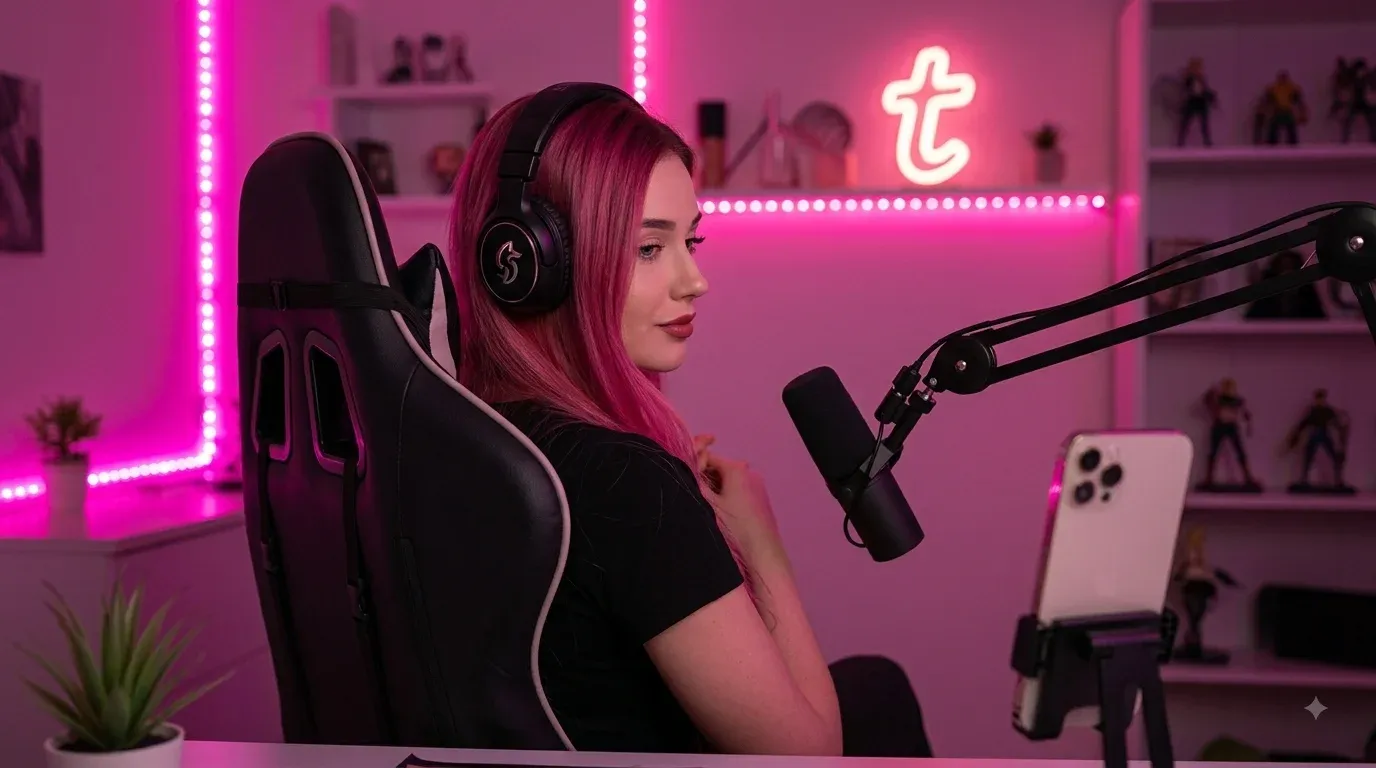
Community gets thrown around as a buzzword often enough that it's worth being precise about what it actually means here. A feed full of strangers' highlight reels isn't a community. Recognizing a face, remembering a name, having a running conversation with the same person or creator over weeks- that's closer to it.
This is also why moderation and community management matter so much on live platforms. It's consistently one of the habits that separates creators who stick around from those who burn out after a few streams. A live chat room only feels like a community if the space is actually looked after. Without that, it's just noise with a camera pointed at it.
The interactive layer matters too. On platforms where viewers can join in rather than just watch, through live chat, games, or going live themselves, the relationship shifts from broadcaster and audience to something closer to a group of people hanging out together. Social gaming is a good example of this in practice. It's built entirely around doing something together in the moment, not consuming content someone else made hours earlier. The viewer stops being an audience member and becomes a participant, which is a small shift on paper but a big one in how connected it actually feels.
It's Not Just One App, It's a Wider Shift
This pattern isn't unique to any single platform. Across live streaming generally, interactive features such as polls, live reactions, and real-time voice or video have become standard rather than novel, largely because they're what keeps people around. Twitch built an entire culture around chat participation rather than passive viewing. TikTok Live and similar formats have leaned hard into real-time gifting and back-and-forth interaction rather than pre-recorded clips. Even e-commerce has picked up on it, with live shopping formats betting that people buy more when a real person is answering questions in real time rather than reading a static product page.
There's a broader cultural shift running alongside it too: more people are gravitating toward experiences that require them to actually show up, rather than ones that ask nothing of them beyond a swipe. Video chat is a low-friction version of that same instinct. You don't need to leave the house, but you do need to actually engage, respond, and be present for the length of the call. That middle ground, more effort than scrolling, less effort than arranging to meet someone in person, is where a lot of people seem to want to be right now.
So Is Scrolling the Enemy?
Not exactly, and it's worth being honest about that. Social media isn't inherently isolating. Plenty of people use it to organize real friendships, stay in touch with family abroad, or find communities around niche interests. The research above isn't an argument against social media as a category; it's an argument against the passive version of it, the endless scroll with no interaction at either end.
The honest takeaway is narrower than delete your apps. If a chunk of your screen time is pure consumption with zero back-and-forth, that's the part worth swapping out, not the screen time itself. Replacing even a fraction of that time with something interactive, a call, a live chat, a conversation with an actual stranger, appears to do more for how connected you feel than another hour of scrolling ever will.
Where This Leaves Us
People aren't choosing live video chat because they've read the psychology research above; most haven't. They're choosing it because it feels different, and there's a reasonably solid explanation for why. Real-time conversation offers something a feed structurally can't: someone paying attention back, in the moment, without an algorithm deciding what either of you gets to see.
That's unlikely to be a passing trend. As more of daily life moves onto a screen, the appetite for the parts of that screen time that actually feel like talking to someone, rather than watching someone, seems more likely to grow than fade.
Live Video Chat vs Social Media: Your Questions Answered
Is video chat actually better for mental health than social media?
The research doesn't suggest video chat is a cure-all, but it does show that active, back-and-forth interaction supports wellbeing more than passive scrolling does. Live video chat is about as active as online interaction gets.
Why does live interaction feel more like community than a social media feed?
Because it involves mutual attention and recognition over time, not just one-way consumption. Community tends to form around repeated interaction, not around watching the same type of content as a crowd of strangers.
Should I quit social media completely?
Not necessarily. The issue the research points to is passive use specifically, not screen time in general. Swapping some scrolling time for actual conversation, on video chat or anywhere else, is the more realistic fix.
What makes random video chat different from messaging apps or texting?
A: Real-time video removes the delay that text-based messaging is built around. There's no drafting a reply or waiting hours for one; the interaction happens and is resolved in just a few minutes, which is closer to how conversation works offline.
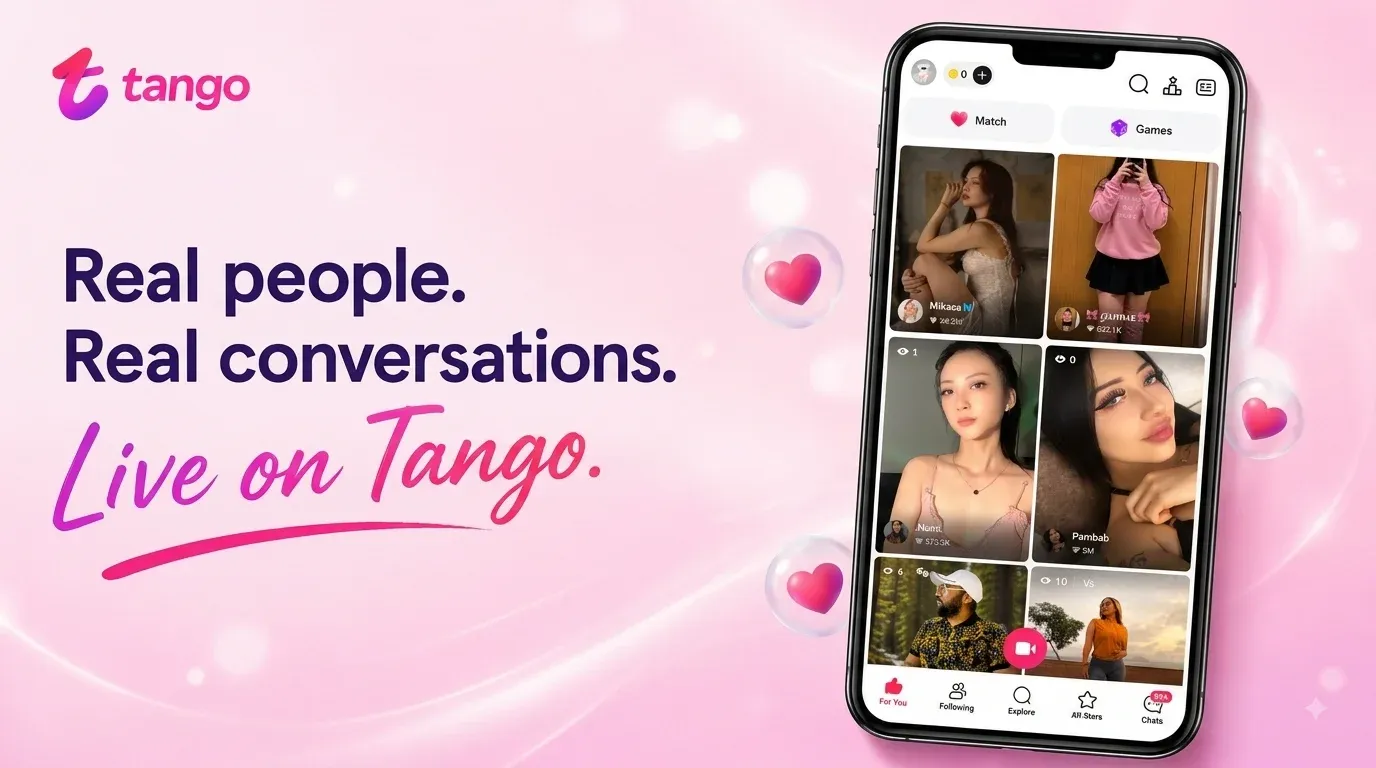
If you're curious what a conversation feels like when there's no endless feed or algorithm deciding what comes next, try Tango Live. You could be talking to someone new in seconds.
Maybe you like
Tango Categories
It Takes U to Tango
Discover how to get more from Tango, whether you're starting a video chat, meeting new people or exploring live streams. These practical guides cover the tools, features and tips that can help you connect, interact and make the most of your experience.
You’ll also find practical guidance for creators who want to go live, engage viewers and grow their presence on Tango. Explore tips for better video chats and live streams, along with guides to viewer engagement, gifts, coins and diamonds, creator tools and building an active community.
Keep Up with Tango
Get the latest articles, product news, and community stories delivered to your inbox.