
by the Tango Team
June 14, 2026
Tango Live vs. Bigo Live: Which Platform Pays Creators More?
A practical comparison for independent creators: how Tango Live and Bigo Live differ on monetization access, discoverability, and creative autonomy, and which suits you better in 2026.
Choosing a live-streaming platform in 2026 is no longer about who has the biggest logo or the loudest marketing. For creators, the real question is simpler: where can you grow sustainably and actually monetize without burning out?
Two names often come up in this conversation: Tango and Bigo Live. Both offer live interaction, gifting systems, and global audiences, but they operate very differently beneath the surface.
This comparison focuses on creator reality, not feature lists: monetization access, visibility, community dynamics, and what day-to-day streaming feels like on each platform. Before diving in, it helps to remember what creators actually care about in 2026: transparency, flexibility, and a path to sustainable income. The rest of this comparison maps each platform against those three priorities.
Why Creators Compare Live Streaming Platforms
Monetization matters more than ever. Creator fatigue is real, audiences are fragmented, and platforms increasingly favour systems that reward scale rather than consistency. The pressure is documented: a 2025 industry study found that 62% of full-time creators report burnout symptoms, and 89% lack access to specialised mental-health resources. Against that backdrop, the platform you choose isn’t just a business decision; it’s a sustainability decision.
Creators compare platforms because:
-
Earnings structures aren’t transparent
-
Discoverability varies dramatically
-
Some platforms quietly favour agency-backed creators
-
Burnout is common when output pressure is high
Smart creators don’t just chase the biggest audience - they choose environments where growth feels possible, not punishing.
Monetization Breakdown: How Creators Actually Earn
Tango: Accessible Monetization by Design
On Tango, monetization is integrated into the natural flow of streaming. Creators earn primarily through virtual gifts, but the system is structured to reward engagement and consistency, not just scale. For a more detailed breakdown of how gifts, diamonds, and payouts connect, see our Live Streaming Monetization 101 guide.
What this means in practice:
-
Smaller creators can earn without massive audiences
-
Stream goals encourage community participation rather than pressure
-
Private and VIP streams offer higher-value interactions
-
Fan clubs create recurring support rather than one-off spikes
Crucially, creators don’t need to “qualify” before monetizing. Earnings grow alongside the audience rather than being locked behind thresholds.
Bigo Live: Monetization at Scale - With Conditions
Bigo’s monetization revolves around its “beans” currency system and performance-based structures. Viewers purchase Diamonds and send them as gifts; gifts arrive in the host’s account as Beans, which are converted to cash. For some creators, especially those aligned with agencies, this can be lucrative.
In practice, however:
-
Monetization often improves only after meeting performance metrics
-
Agency contracts can dictate streaming hours and output
-
New creators may struggle to convert early engagement into income
-
Payout clarity varies by region and status
Bigo rewards volume and endurance, but this model isn’t equally friendly to casual, independent, or part-time creators.
Verdict on Monetization
The more useful question isn't just who pays more, it's who pays earlier and more consistently.
-
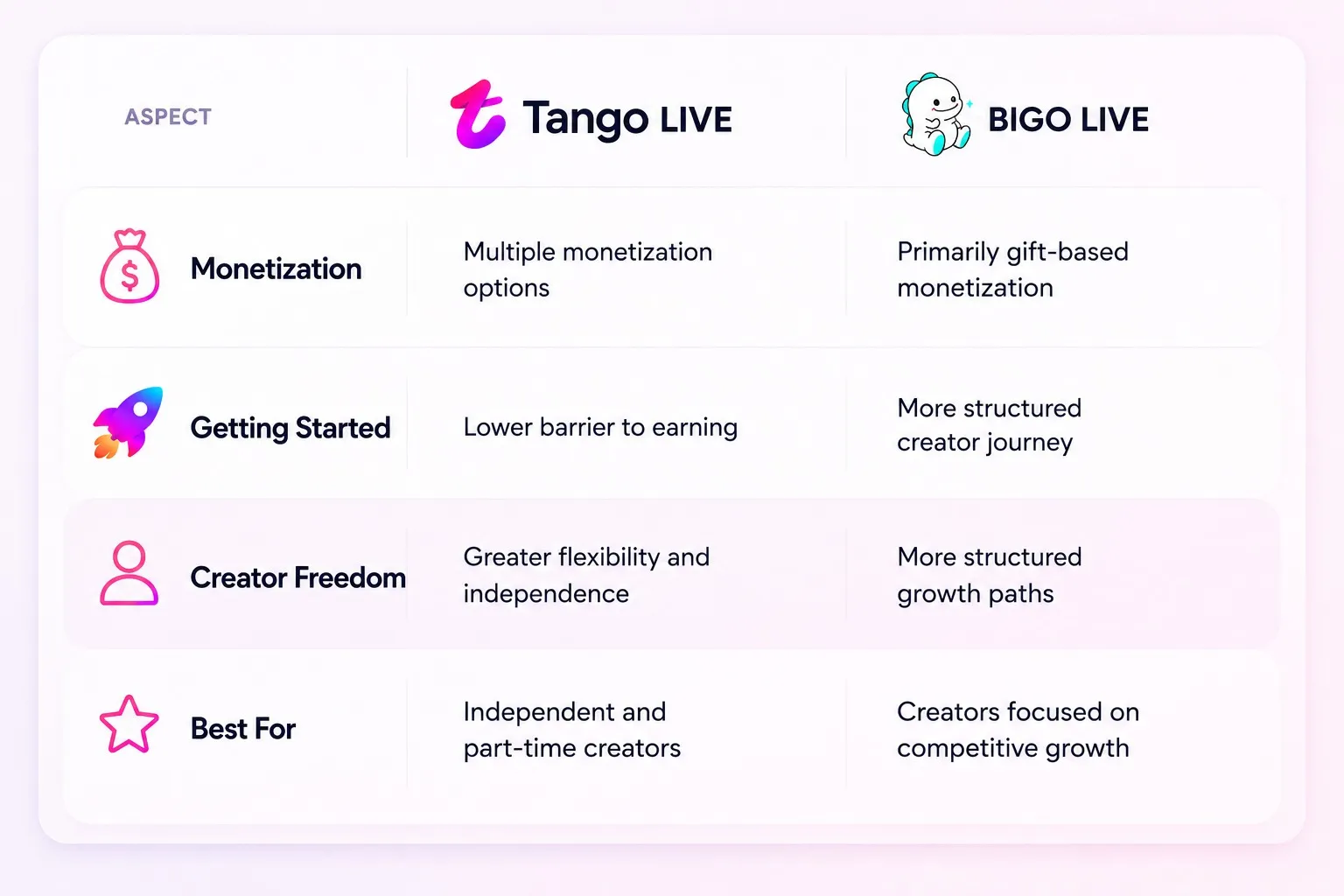
Tango lowers the barrier to earning. For most creators, this means faster access to actual earnings rather than delayed rewards.
-
Bigo amplifies earnings once scale and structure are achieved
For many independent creators, Tango feels more financially attainable sooner, even if absolute top earners may exist elsewhere.
Growth Potential: How Discoverable Are New Creators?
Tango: Smaller Ecosystem, Higher Visibility
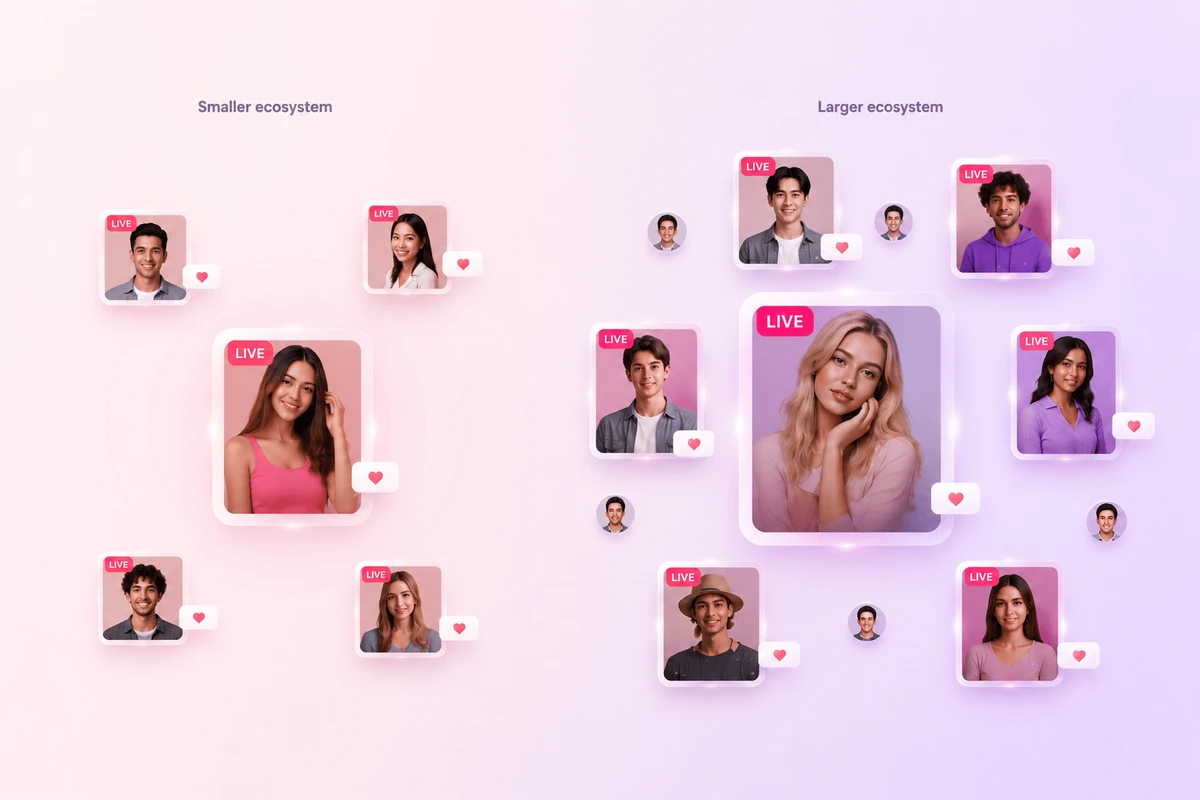
Tango’s ecosystem is intentionally compact. While the audience size is smaller than Bigo’s, competition for attention is also lower, making it easier for viewers to discover new creators on Tango.
This creates a different growth dynamic:
-
New creators appear in Explore feeds sooner
-
Smaller streams receive meaningful interaction
-
Consistency is rewarded more than viral spikes
-
Communities form around creators, not algorithms
For creators starting out, this often means faster feedback loops and quickly knowing what works and what doesn’t.
Bigo Live: Massive Audience, Heavy Competition
Bigo’s strength is scale. With a large global user base, potential reach is high, but so is competition.
In practice:
-
Thousands of creators stream simultaneously
-
Discoverability depends heavily on algorithmic boosts or agency support
-
New creators can feel invisible without external promotion
-
Growth often requires aggressive scheduling
For creators who thrive in high-output environments, this can work. For others, it becomes exhausting.
Verdict on Growth
Tango prioritises visibility through participation.
Bigo prioritises visibility through performance and scale.
For creators seeking the best live streaming app in 2026, visibility matters more than scale. Neither model is inherently wrong; they suit very different creator personalities and lifestyles.
Creator Tools: Features vs Usability
Tango’s Toolset
Tango focuses on tools that directly support solo creators:
-
Stream goals tied to audience participation
-
Leaderboards that reward engagement, not just revenue
-
Creator profiles that highlight personality and style
-
Private streams for deeper fan connections
-
Performance insights without overwhelming analytics
Many creators say this kind of simplicity keeps their focus on engagement rather than dashboards and graphs. The emphasis is on using tools live rather than managing them off-stream.
Bigo’s Toolset
Bigo offers a broader feature set, including:
-
Multi-guest rooms
-
Game streaming integrations
-
Advanced agency tools
-
Structured performance tracking
These tools shine in professional or team-based setups, but can feel heavy for independent creators who simply want to go live and connect.
Verdict on Tools
Bigo offers depth.
Tango offers clarity.
The best tool is the one creators actually use in real time, and Tango’s simplicity often wins here.
Creator Autonomy & Pressure: Streaming on Your Terms
One of the most overlooked (yet decisive) differences among live streaming platforms is the extent to which creators actually have control over their time, content, and energy.
In 2026, more creators are stepping back from high-pressure models that prioritise output over well-being. The question is no longer “How much can I stream?” but “How long can I sustain this without burning out?”
This is where Tango and Bigo diverge sharply.
Autonomy on Tango: Flexibility by Default
Tango is built around the assumption that creators have different lives, schedules, and energy levels. Streaming is encouraged, but not enforced.
In practice, this means:
- No mandatory streaming hours
- No contractual performance quotas
- No obligation to maintain a specific schedule to stay visible
- Freedom to experiment with formats and pacing
Creators can go live when it suits them, adjust their approach over time, and step back without feeling penalised. This autonomy makes Tango especially appealing to solo creators, part-time streamers, and those balancing content creation with work or study.
Rather than pushing creators to maximise output, the platform rewards presence, consistency, and genuine interaction, even at a modest scale, a sustainable alternative to Bigo Live for creators who'd rather build than grind.
Pressure on Bigo: Structure Comes With Expectations
Bigo’s ecosystem, particularly for creators connected to agencies, tends to be more structured, and with structure comes pressure.
Common realities include:
- Target-based performance expectations
- Informal or formal streaming hour requirements
- Emphasis on continuous output to maintain visibility
- Reduced flexibility once part of an agency system
For some creators, this structure is motivating. It provides clear goals and a professional framework. For others, especially independent creators, it can feel restrictive and emotionally taxing over time.
This contrast is why many creators in 2026 are rethinking where they stream, not just how often. Streaming can shift from creative expression to obligation, which is where burnout often enters the picture.
Why Autonomy Matters More Than Ever
Creative burnout is one of the biggest threats to long-term success in live streaming. Platforms that prioritise autonomy tend to retain creators longer, foster healthier communities, and encourage more authentic content.
The trade-off is clear:
- Bigo offers structure and scale, but often at the cost of flexibility.
- Tango offers freedom and sustainability, even if growth is more organic.
For creators who want to build something lasting, autonomy isn’t a luxury. It’s a requirement.
At-a-Glance: Tango vs Bigo for Independent Creators
| Criteria | Tango Live | Bigo Live |
| Creator autonomy | High - no quotes or contracts | Lower - often structured or agency-led |
| Pressure level | Low to moderate | Moderate to high |
| Monetization access | Early, incremental | Improves mainly after scale |
| Discoverability | Easier in a smaller ecosystem | Highly competitive |
| Growth style | Organic, community-led | Volume and performance-driven |
| Growth style | Independent, sustainability-focused creators | High-output or agency-backed creators |
Community & Culture: The Hidden Differentiator
Tango’s Culture
Tango’s community tends to feel:
-
More conversational
-
Less transactional
-
Loyal over time
-
Focused on interaction rather than output quotas
Creators often recognise recurring viewers, which organically strengthens retention and gifting behavior. This loyalty loop turns engagement into sustained income, one of Tango’s biggest advantages.
Bigo’s Culture
Bigo’s culture varies heavily by region and agency. In some spaces, it thrives; in others, it can feel:
-
Highly transactional
-
Competitive between creators
-
Focused on targets rather than connections
For creators who enjoy the pressure of performance, this can be motivating. For others, it accelerates burnout.
Who Is Bigo Actually Better For?
To be fair, Bigo is not the wrong choice for everyone.
Bigo may suit creators who:
-
Thrive in high-volume environments
-
Are comfortable joining agencies
-
Stream many hours per week
-
Target specific high-spend regions
-
Prefer structured performance systems
For these creators, Bigo’s scale can be an advantage if they’re ready for the demands.
Who Is Tango Built For?
Tango shines for creators who:
-
Want to monetize early without contracts
-
Prefer organic growth
-
Value interaction over scale
-
Stream consistently but not endlessly
-
Want autonomy over their content and schedule
As one lifestyle streamer put it: “Tango lets me grow at my own pace without pressure.” In 2026, this group is growing, especially as creators prioritise sustainability over reach for its own sake.
Final Thoughts: Tango vs Bigo in 2026 - Choosing the Right Kind of Growth
Comparing Tango and Bigo isn’t about declaring a universal winner. It’s about understanding what kind of creator experience you’re signing up for.
Bigo is built for scale. It rewards creators who can commit to high output, structured performance systems, and often agency-led growth. For creators who thrive under clear targets and constant momentum, this environment can work well.
Tango takes a different approach. It prioritises autonomy, early access to monetization, and organic visibility. Creators are free to stream on their own terms, experiment with content, and build communities without contractual pressure or rigid expectations
In 2026, as more creators prioritise sustainability over burnout-driven growth, this shift reflects a broader evolution across the creator economy, where long-term audience relationships and flexible monetization are becoming increasingly important. The ability to earn without obligation, grow without quotas, and step back without penalty isn’t just appealing, it’s becoming essential.
If you’re looking for a platform that values presence over pressure and connection over output, Tango offers a more flexible and creator-first path. Not necessarily louder, but often more sustainable. Learn more about Tango’s creator tools and community in our guide to what makes a Tango creator successful, or start with our walkthrough on how to start live streaming on Tango.
FAQ
Which platform pays creators more, Tango or Bigo Live?
It depends on what stage you're at. Bigo's host tier can pay well at scale, but full host-tier earnings are typically gated by streaming-hour and revenue thresholds, with platform commissions and currency conversions taken before payout. Tango lowers the entry barrier, there are no mandatory hour quotas or contract requirements, so most creators reach payable earnings faster, even if absolute top-end earners may exist on other platforms.
Do I need an agency to earn on Bigo Live?
Not strictly, but Bigo's host structure ties meaningful host-tier earnings to monthly performance thresholds (streaming hours, active days, and revenue minimums), which are easier to hit with agency support. On Tango, there is no agency requirement; creators monetize directly through gifts, fan clubs, and private streams.
Is Tango a good alternative to Bigo Live?
For independent and part-time creators, yes. Tango is built around lower barriers to entry, no mandatory streaming hours, and no fixed-term contracts. Creators who want to test live streaming without committing to agency contracts often choose Tango as an alternative to Bigo Live.
How long does it take to start earning on Tango vs Bigo Live?
On Tango, creators can earn from the first live stream, gifts convert to diamonds and then to cash without qualification thresholds. On Bigo Live, small gifts are possible from day one, but reaching the higher host-tier earnings bracket typically requires sustained streaming and consistent output.
Can I stream on both Tango and Bigo Live?
Generally, yes, from Tango’s side, Tango does not require exclusivity. Bigo’s terms vary depending on whether a creator is signed to an agency and the type of contract they hold; multi-platform streaming is sometimes restricted under certain agency contracts. Check your own contract before going multi-platform, and see the Tango Help Centre for payout and account specifics.
Why are creators looking for alternatives to Bigo Live?
Three reasons recur: contract rigidity (fixed-term minimums with auto-renewal), performance pressure (monthly streaming-hour and revenue quotas at the host tier), and burnout. The wider context matters too, a 2025 industry study found 62% of full-time creators report burnout symptoms, and creators are increasingly drawn to platforms that don't tie earnings to mandatory output.
Ready to Start Streaming Your Way?
You don’t need a contract, an agency, or a massive following to begin earning on Tango. You need consistency, connection, and the right environment.
If you’re exploring alternatives to Bigo, or simply rethinking how you want to stream in 2026, Tango is worth experiencing for yourself.
Download Tango now on Android, via the official Onside Store if you’re on iOS.
If you’re outside the EU, you can also access Tango through your mobile browser at tango.me, or head straight to www.tango.me to use the web app and experience the future of social video.
Maybe you like
Tango Categories
Why Tango
Choosing a video chat or live streaming platform depends on how you want to connect, meet people and interact online. Different platforms offer different approaches to video chat, social discovery, live streaming, safety, community features, and creator tools, so comparing them is an important part of finding the right experience.
This section explores Tango alongside other video chat and live streaming platforms. Discover video chat apps, Tango alternatives and platform comparisons covering everything from random video chat and meeting new people to live streaming, Viewer engagement and creator features.
Keep Up with Tango
Get the latest articles, product news, and community stories delivered to your inbox.